
A sweater panel can look beautifully even on the hook and still turn out wider than expected. A gauge swatch gives you a chance to notice that before you have made the whole garment. It is not busywork; it is a small sample that helps you choose a hook and understand how your hands, yarn, and stitch pattern work together.
Swatch the Actual Stitch
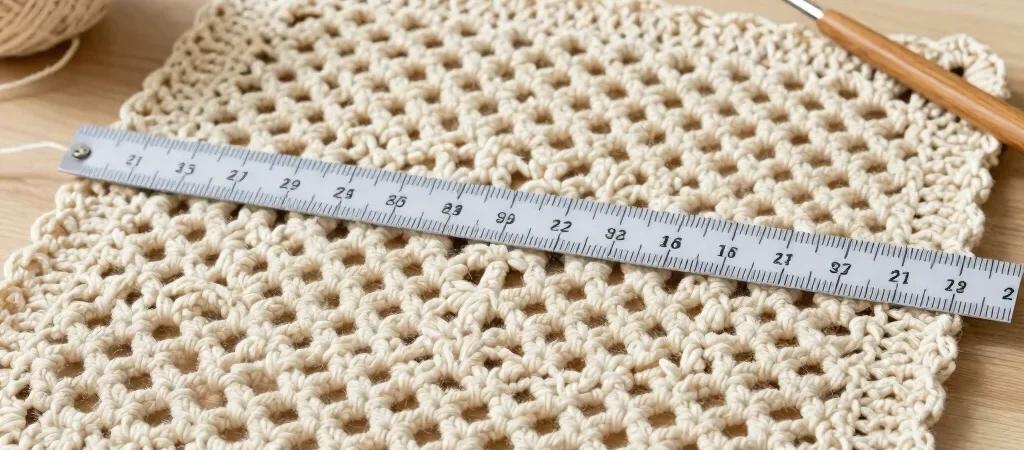
Use the yarn and stitch pattern named in your project, and make a swatch larger than the measurement area you need. If the pattern gives gauge over four inches, a larger square leaves room to measure away from the edges, where stitches can be less consistent. Keep the stitch count and row count notes with the swatch so you can compare them with the pattern.
Let your working yarn move as it usually does rather than trying to force your stitches to match a number. If the pattern specifies a hook size, start there, but treat the fabric as well as the measurement as useful information. A swatch that feels stiff or loose may not suit the project, even if the count looks close.
Measure After Care
If the finished item will be washed or blocked, treat the swatch the same way before measuring it. Follow the yarn label and the care instructions for the project; different fibers can respond differently to washing and drying. Let the sample dry fully and rest flat before you check it.
Measure across the middle of the fabric, not along a curled or stretched edge. If you have more stitches in the same width than the pattern calls for, try a larger hook; if you have fewer, try a smaller one, then make another swatch. Keep the first sample too: it records what changed and makes your next choice less of a guess.