
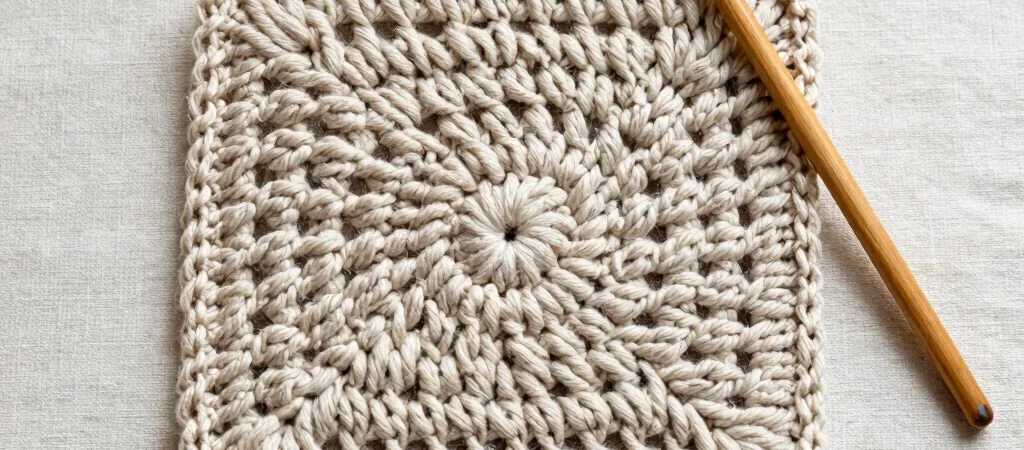
You finish a row, turn your work, and the edge looks a little wider than it did a few rows ago. Before you unravel anything, count the stitches. Edges tend to wander when the first or last stitch is easy to miss, or when the turning chain is treated differently from row to row.
Make the First Stitch Visible
After turning, look for the first stitch at the edge of the row, not just the chain space beside it. In single crochet, the top of a stitch looks like a small V; place your hook under both loops unless the pattern says otherwise. A removable stitch marker in the first stitch can help while you get used to spotting it.
At the end of the row, check for the final stitch before you turn. It can sit close to the turning chain and is easy to skip, especially in a soft or dark yarn. Counting each completed row now and then is a simple way to catch a change before it becomes obvious in the fabric.
Follow the Turning Chain Rule
Patterns differ on whether a turning chain counts as a stitch, so use the instruction for that pattern rather than relying on a general rule. If it counts, the pattern will usually tell you where to work the next row and whether to crochet into the top of the chain at the end. If it does not count, work the first stitch where the pattern directs and do not add an extra stitch into the chain.
When an edge starts to ripple, pause and compare the stitch count with the pattern before changing your tension. Marking the first stitch of each row makes the row ends easier to read and gives you a reliable place to check. One careful count can save a lot of frogging.